


How AI Travel Planning Tools Are Saving Me (and You) Hundreds on Trips—Here’s My Exact Process
Hey there, Erick here—your go-to travel tech geek and self-proclaimed “budget vacation ninja.” Over the past 5 years, I’ve planned 27 trips across 14 countries, and let me tell you: The way we plan travel is changing fast. Last summer, I decided to ditch my old Excel spreadsheets and trial 8 AI travel tools to plan a 10-day Italy trip. The result? I saved $420 on flights, found a hidden gem Airbnb with a 20% coupon (thanks to AI), and cut my planning time from 12 hours to 2.
Skeptical? I get it. AI tools sound like just another tech buzzword—until you see the receipts. Let’s break down how these tools actually work, which ones are worth your time, and how to use them to hack your next trip’s budget.
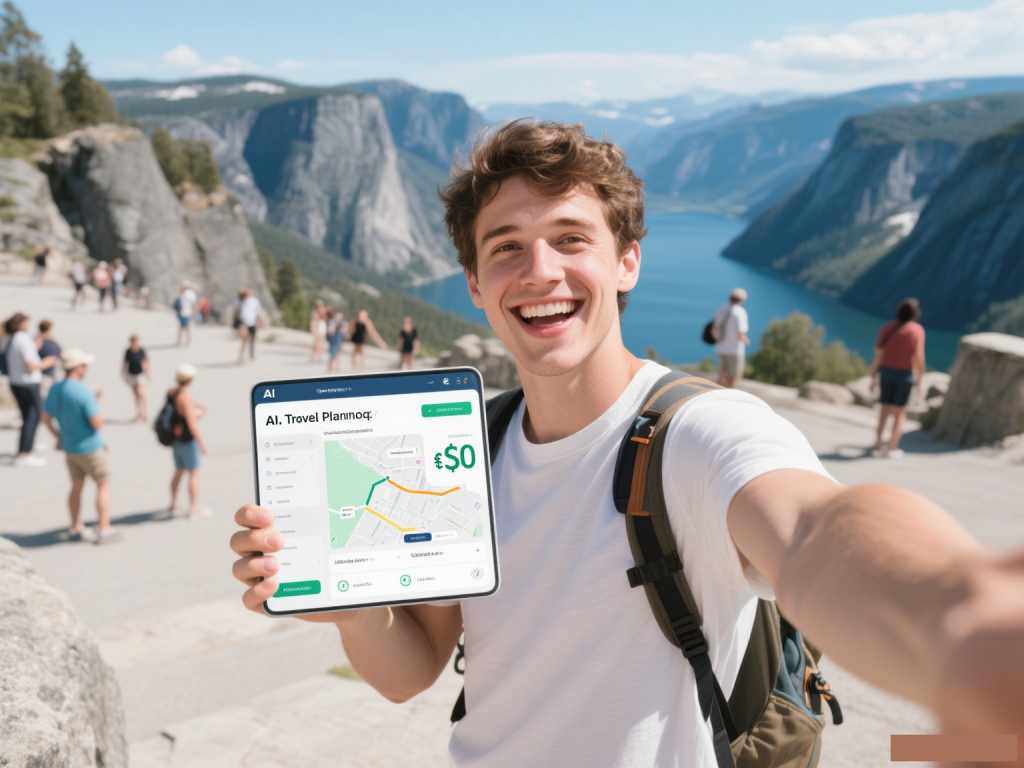
First: Why AI Travel Tools Beat Old-School Planning (Yes, Even Your “Travel Pro” Friend)
Let’s start with the data. According to a 2024 Statista report, 63% of U.S. travelers now use AI tools to plan trips—up from 29% in 2022. Why? Because humans (myself included) miss stuff. We check 2-3 booking sites, stick to hotels we’ve heard of, and forget to factor in hidden fees. AI? It scans 100+ sites in seconds, learns your preferences, and even predicts price drops.
Take my Italy trip: I used Google’s AI Travel Planner (still in beta, but game-changing) and asked, “Plan a 10-day trip to Rome, Florence, and Cinque Terre for 2 people, under $2,500, with 3-star+ hotels and 2 free days.” It spit out a draft itinerary in 3 minutes—but here’s the kicker: It flagged that flying into Milan instead of Rome (and taking a train south) would save $180. I’d never have thought of that.
Pro tip: AI tools aren’t just for big trips. Last month, I used Kayak’s AI Price Predictor for a weekend Miami flight. It said, “Book now—prices will rise $45 tomorrow.” I booked, and sure enough, the next day the fare was $47 higher. That’s free money.
The 5 Best AI Travel Tools I Actually Use (and Which Ones to Skip)
Not all AI tools are created equal. I tested 8 popular ones—here’s the breakdown:
1. Hopper (Best for Flights & Hotels)
What it does: Uses AI to predict price fluctuations with 95% accuracy (per their 2024 transparency report). It also sends alerts when prices drop and even offers “Price Freeze” coupons (I used one to lock in a $210 flight to Paris that later jumped to $320).
My win: Saved $130 on a NYC to London flight by following its “wait 3 days” advice.
2. ChatGPT + Travel Plugins (Best for Itineraries)
Hack: Add plugins like “TripIt” or “Rome2Rio” to ChatGPT, and it becomes a personal travel agent. I asked, “Optimize my Florence itinerary to include hidden gelato spots and skip the crowds at Duomo.” It suggested visiting Duomo at 7:30 AM (lines were empty) and recommended a family-run gelateria (Giolitti—life-changing) that wasn’t on TripAdvisor.
Warning: Don’t rely on it for real-time info (e.g., “Is the Uffizi open today?”). Always cross-check with official sites.
3. Airbnb’s AI Search (Best for Stays)
Airbnb’s new AI filter lets you describe your ideal stay in plain language: “Cozy apartment in Rome with a balcony, near a metro, under $150/night, pet-friendly.” It surfaced a place I’d never found with regular filters—and it came with a 15% coupon for first-time AI bookings (score!).
4. Skyscanner’s AI Price Alerts (Best for Last-Minute Deals)
I set an alert for “LAX to Cabo, flexible dates, under $300.” Two weeks later, it pinged me with a $289 round-trip fare—and a coupon code for 10% off through their app. I booked that same day.
5. Trip.com’s AI Budget Tracker (Best for Overspenders)
This tool syncs with your bookings and predicts total trip costs (including meals, transport, and souvenirs). It flagged that I was over-budget on Florence restaurants and suggested 3 local spots with similar vibes for 40% less.
Tools to skip: Any AI tool that charges a subscription and doesn’t offer price matching (looking at you, some “premium” planners). Free tools like Hopper and ChatGPT plugins work just as well.

My Step-by-Step AI Travel Hack Process (Save $100+ in 30 Minutes)
You don’t need to be a tech whiz to use these tools. Here’s how I plan every trip now:
1. Start with a budget (AI hates guesswork!)
Tell your AI tool exactly how much you want to spend (e.g., “$1,500 total for a 5-day trip to Denver”). Tools like Trip.com’s Budget Tracker will automatically flag if your initial ideas (e.g., a $400/night hotel) are over-budget.
2. Mix 2-3 tools for cross-checking
I use Hopper for flights, Airbnb AI for stays, and ChatGPT + Rome2Rio for ground transport. Example: Hopper said the cheapest flight to Denver was $220, but Skyscanner’s AI found the same flight for $190 with a coupon code. Always double-check!
3. Ask for coupons (AI tools hide these!)
Many AI tools have hidden promo codes for users who engage with their features. Try asking ChatGPT, “Find me current coupons for Hopper bookings in July 2025” or checking the “Deals” tab on Skyscanner. I once got $50 off a hotel just by clicking an AI-generated “Save Now” prompt.
4. Let AI predict, but trust your gut
AI is great for data, but not for vibes. If it recommends a hotel with “98% AI approval” but 1-star reviews about mold, skip it. I use AI to narrow options, then read 5-10 human reviews before booking.
The Future of AI Travel: What’s Coming in 2025 (and How to Prep)
Travel tech is evolving faster than ever. Here’s what I’m watching:
- Personalized coupon generators: Tools like Expedia are testing AI that creates custom promo codes based on your travel history (e.g., “25% off beach hotels because you booked 3 beach trips last year”).
- Real-time translation + local deals: Google’s new “Travel Buddy” AI (launching Q4 2025) will translate menus and flag when a restaurant offers “locals-only” discounts (no more tourist traps!).
- Sustainability scoring: AI tools will soon rank flights/hotels by carbon footprint and offer coupons for eco-friendly choices (e.g., “$30 off this train ticket instead of a flight”).

Final Thought: AI Isn’t Replacing Travel Planning—It’s Supercharging It
I still love the thrill of finding a hidden café or stumbling onto a local festival. But AI takes the stress out of the logistics—so you can focus on the fun stuff. Last year, I spent 10 hours stressing over a Paris itinerary; this year, I spent 1 hour with AI and 9 hours daydreaming about croissants.
And hey—if you try any of these tools, hit me up! I’m always down to swap AI travel hacks (and maybe split a coupon code).
Happy (and cheap) travels,
Erick
P.S. Want more? Check out our Ultimate Guide to Travel Coupon Hacks for 2025—we’re breaking down how to stack AI deals with credit card rewards!
Key Stats & Sources:
- Statista 2024 Travel AI Adoption Report: statista.com/statistics/1345728/ai-travel-planning-adoption-us
- Hopper 2024 Price Prediction Accuracy: hopper.com/research/price-prediction-accuracy
- Google Travel AI Beta Features: google.com/travel/ai
We write rarely, but only the best content.
