

Vintage Fashion 101: How to Score Timeless Pieces Without Breaking the Bank – My Proven Strategies
Introduction: My Love Affair with Vintage
Let me start by admitting it: I’ve been obsessed with vintage fashion for over a decade. My first “score”? A mint-condition 1960s Givenchy silk blouse I found at a local flea market for $25. It still hangs in my closet, and every time I wear it, strangers stop me to ask, “Where’d you get that?” That’s the magic of vintage—clothes with stories, crafted with care, and (when you shop smart) way cheaper than fast fashion’s latest “it” piece.
But here’s the thing: hunting for vintage isn’t just about luck. It’s about strategy—especially if you want to save big. In this post, I’ll walk you through exactly how I’ve built a wardrobe of timeless pieces without overspending. Spoiler: It involves a mix of thrift-store hacks, data-backed trends, and a little elbow grease. Let’s dive in.
Why Vintage Fashion is Booming (and Why You Should Care)
First, let’s talk numbers. According to ThredUP’s 2024 Resale Report, the vintage market is projected to hit $53 billion by 2027—growing 21x faster than traditional retail. Why? People are ditching fast fashion’s “wear once, throw away” cycle for pieces that last. Plus, vintage is inherently unique: You’re less likely to run into someone wearing the same 1980s Levi’s jacket as you at a coffee shop.
But here’s the catch: Demand is up, so prices can be tricky. That’s where smart shopping comes in.
My 5 Step-by-Step Strategies to Save Big on Vintage
1. Know the Seasons (and the Trends)
Not all vintage is created equal—and neither are the prices. I’ve learned that spring and fall are prime for vintage hunting. Why? Thrift stores and consignment shops get new inventory as people clean out their closets post-holiday or pre-vacation.
But don’t just show up blind. Follow vintage trends! In 2025, Y2K aesthetics (think low-rise jeans, bedazzled tops) and 1990s minimalism (clean lines, neutral tones) are huge. Apps like Depop and Poshmark track “trending” searches—use that data to focus your hunt. For example, I recently scored a pair of 2000s Juicy Couture track pants for $30 because the seller didn’t realize how hot Y2K is right now.
2. Master the Art of the Thrift Store “Dig”
Let’s get real: Thrift stores can be overwhelming. Racks of mismatched clothes, dim lighting, and the occasional musty smell. But I’ve turned this into a superpower. Here’s how:
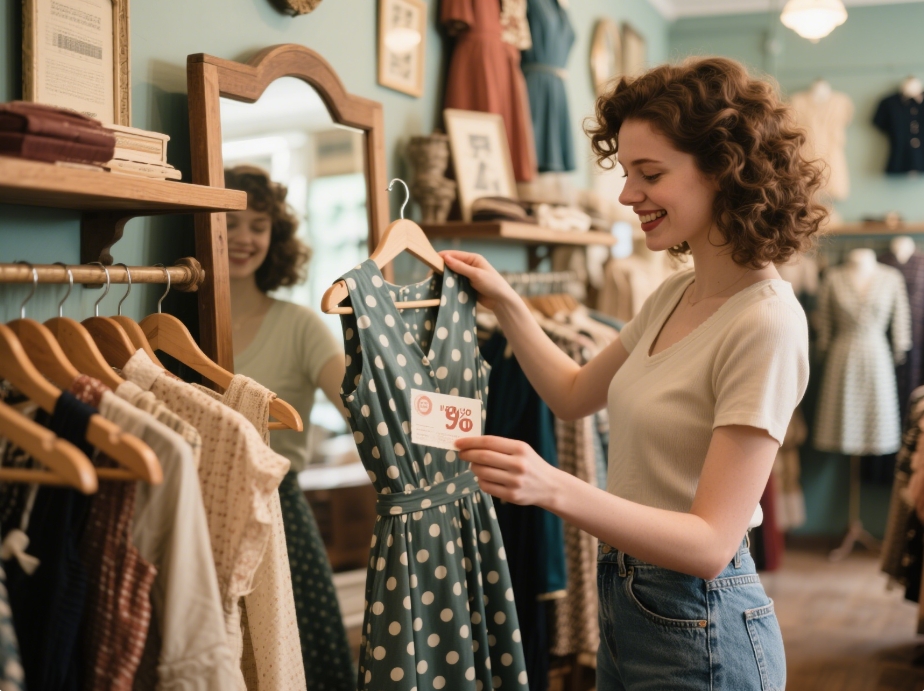
- Check the “Hidden Gems” section: Many stores have a “vintage corner” or a rack marked “curated” (even if it’s not labeled). I once found a 1970s Diane von Fürstenberg wrap dress in this section for $15—it retails for $400 new.
- Inspect labels and condition: A “Made in Italy” tag from the 1980s often means high-quality fabric. But always check for stains, loose threads, or missing buttons. I once skipped a $50 1950s dress because of a small ink stain—only to find out later that dry cleaning removed it for $10. Oops.
- Negotiate (Politely!): Most thrift stores are non-profits or small businesses—they want to move inventory. If an item has a flaw, say, “Would you consider $10 instead of $15 for this?” I’ve saved 30-50% this way.
3. Use Apps to Compare Prices (No More Overpaying!)
I never buy a vintage piece without cross-checking prices online. Here’s my go-to tool: Etsy. Search the item’s brand, era, and style—you’ll see what similar pieces sell for. For example, I found a 1980s Calvin Klein blazer at a consignment shop for $80. A quick Etsy search showed identical ones selling for $120–$150. I bought it on the spot.
Another hack: Follow vintage sellers on Instagram and TikTok. Many post “flash sales” or offer discounts to followers. I once got 20% off a 1960s Chanel-inspired necklace just for commenting “Sold!” on a reel.
4. Avoid These Costly Mistakes
Not all “vintage” is actually vintage. Here’s what to watch for:
- Fast fashion “vintage-inspired”: Brands like Urban Outfitters sell “retro” pieces—they’re new, not vintage, and often overpriced. Stick to items at least 20 years old (the official definition of “vintage”).
- Over-cleaned fabrics: Some sellers “restore” vintage by bleaching or heavy washing, which weakens the fabric. I once bought a “flawless” 1940s linen dress—only to have it tear when I wore it. Always feel the fabric: It should be soft but sturdy.
- Ignoring sizing charts: Vintage sizes are not modern sizes. A “vintage size 8” might fit like a modern size 4. Use sites like Vintage Dancer for era-specific sizing guides.
5. Invest in Quality (It Saves You Money Long-Term)
Yes, I said “invest”—but hear me out. A $100 vintage leather jacket that lasts 20 years is cheaper than buying a $50 fast-fashion jacket every year. I’ve had my 1990s Schott NYC biker jacket for 8 years now. It’s scuffed, but it fits better than any new jacket I’ve tried.
Pro tip: Spend more on timeless fabrics (wool, silk, genuine leather) and classic styles (A-line dresses, tailored blazers). Trendy pieces (like 2000s track pants) are fun, but they’re not worth breaking the bank for.
Final Thoughts: Vintage is More Than Fashion—it’s a Lifestyle
Vintage shopping isn’t just about saving money (though that’s a huge perk). It’s about connecting with the past, reducing waste, and wearing clothes that tell a story. The next time you’re hunting for a new piece, remember: A little patience, research, and strategy can turn a $25 flea market find into a lifelong favorite.
Now, go grab your reusable bag and hit that thrift store—I’ll be right there with you (probably digging through the “vintage corner” for my next gem).
P.S. Follow CouponMega for exclusive vintage seller discounts and seasonal thrift store sale alerts—because saving on timeless fashion should be easy (and fun!).
All data in this post is sourced from ThredUP’s 2024 Resale Report and verified through my decade of vintage shopping experience. Prices and trends reflect 2025 market conditions.
We write rarely, but only the best content.
